Food-safety update, September 28, 2026: Rice, egg and storage guidance has been added to this historical family recipe. Unavailable shopping links and video directions have been removed.
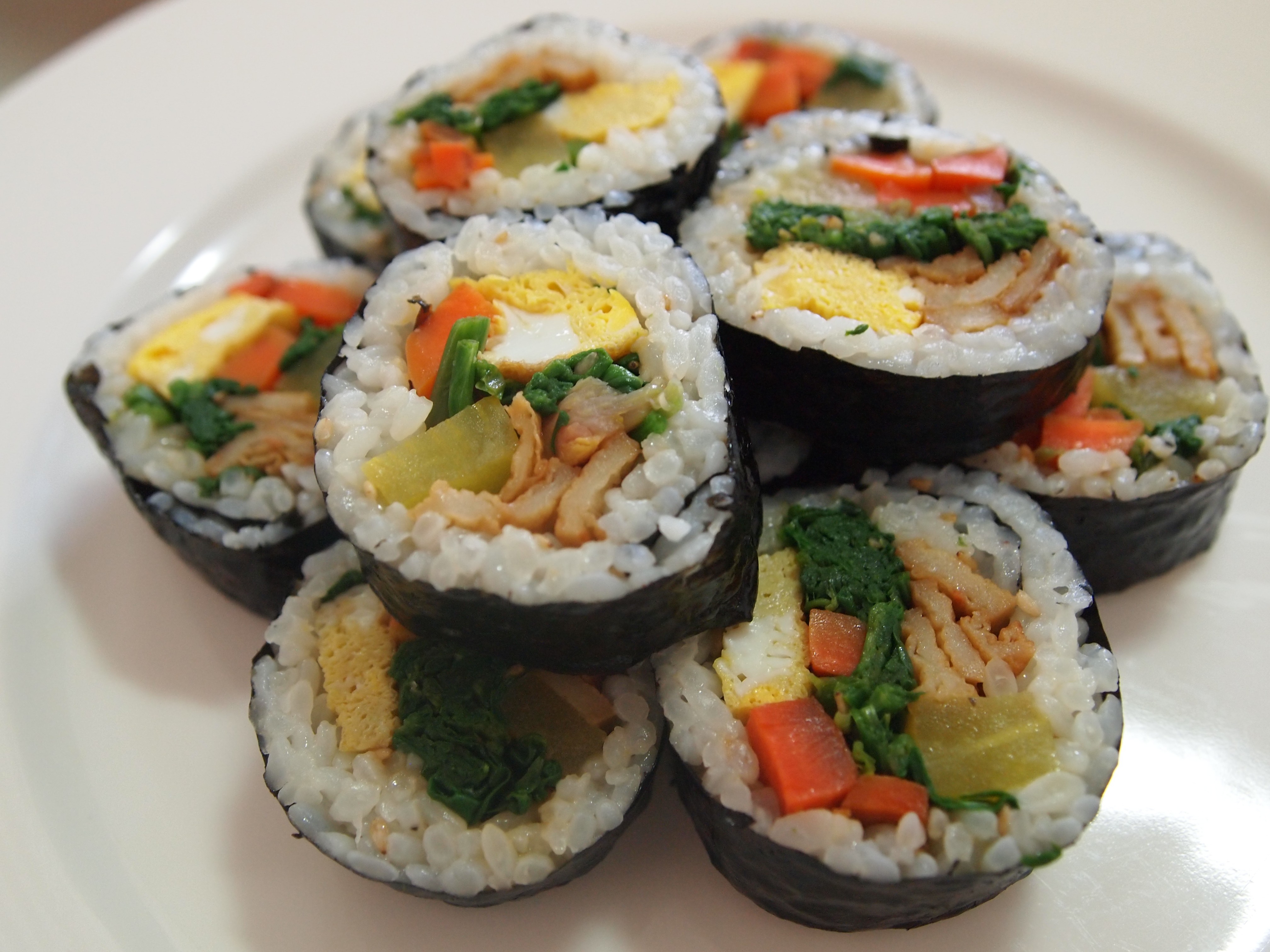
Today we decided to make kimbap.
I ate kimbap growing up but really started liking it recently. It is very common in Korea. We eat it at least a couple times a month. It’s pretty quick to make and very easy to buy. There are kimbap joints all over Korea and it is my preferred lunch when I eat out by myself.
The word kimbap is actually two Korean words. Kim (김) is the word for the black dried seaweed that is pressed into sheets. Bap (밥) is the word for rice. So essentially kimbap is just dried seaweed and rice. But it is much more common to put a bunch more stuff in the middle.
Kimbap, the Rice Sandwich
What's Covered in this Article
- Kimbap, the Rice Sandwich
- Kimbap Recipe
- Ingredients:
- Process
I think of it like a Korean rice sandwich. Generally in the States a sandwich will have some kind of meat in it along with two pieces of bread. But it could also have cheese, pickles, lettuce, or it can be just peanut butter and jelly.
If you go out to eat kimbap in Korea they usually have a regular kimbap and then some kinds of special kimbap. But there are also some gourmet kimbap places around. My favorite is tuna kimbap. That’s the canned tuna not the raw tuna. It usually has sesame seed leaves and mayonnaise in it.
Today we are going to make a type of regular kimbap.
Kimbap Recipe
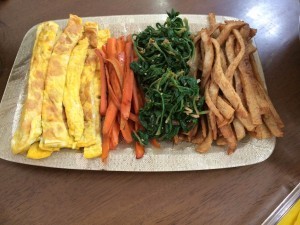
Ingredients:
Kim (dried seaweed)
Rice cooked – short grain
Eggs
Carrots
Spinach
Korean fish cake
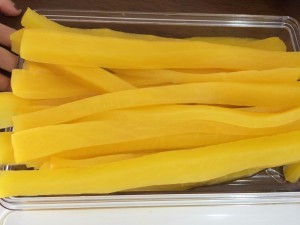
Danmuji – yellow pickled radish
Extra Ingredients:
Soy sauce
Sesame seeds
Sesame seed oil
Vegetable oil
Salt
Process
First you want to prepare all the ingredients. Cook the rice in a rice cooker or pot but put a little less water than normal to make the rice slightly harder. Once the rice is done then mix with a little sesame oil.
Fry the eggs with oil and a little salt to make omelets, cooking the egg mixture to 160°F (71°C). Then cut them into little strips. Next fry the carrots until they are a little tender and cut them into strips. Prepare the fish cake according to its package cooking instructions, fry with a little soy sauce and salt, then cut into strips.
Finally boil the spinach and drain. Then add a little sesame seed oil, sesame seeds, soy sauce, and mix with a bit of salt. Also you will need to cut the danmuji into little strips.
Now that you have all your ingredients ready you can start to make the kimbap.
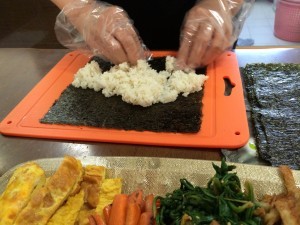
Spread some rice over a sheet of dried seaweed.
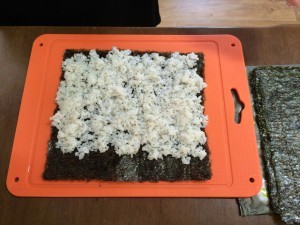
Make sure to leave about an inch of space on one side.
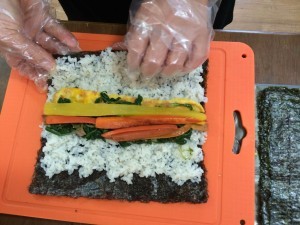
Now, add all your ingredients in the middle.
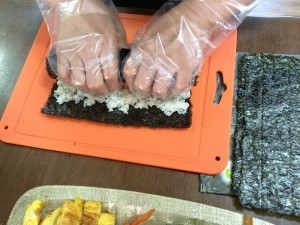
Then roll it up. This part is a little difficult. It took me many tries to get it right. My mom is an expert but she said it is difficult to explain. Actually that has been kind of a common theme as I was growing up. Mom was always much better at showing than explaining. Also kind of a common Korean mom thing I think.
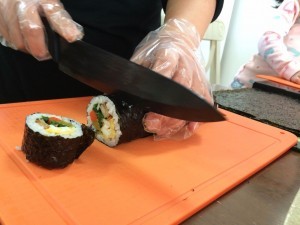
Then you want to cut the roll into nice little pieces.
Now you are all done and can enjoy your kimbap.
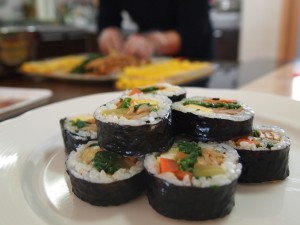
Thanks for making this for me today, Mom.
Rice handling and lunch storage
Prepare with clean hands, utensils and washed produce. Serve the kimbap promptly. For later use, cool the cooked rice quickly in small portions, ideally within one hour, and refrigerate the rice and prepared rolls. Eat refrigerated rice dishes within 24 hours.
Keep the rolls at 40°F (4°C) or colder; carry a packed lunch in a cooler with ice packs. Discard perishable food after more than 2 hours unrefrigerated, or 1 hour above 90°F (32°C). Keep cooked fillings separate from raw egg or seafood.
Food-safety sources: Food Standards Agency — Home food fact checker: Rice; FoodSafety.gov — Cook to a Safe Minimum Internal Temperature; FDA — Selecting and Serving Fresh and Frozen Seafood Safely; FDA — Safe Food Handling.